The Sudoku Puzzle Book: A Perfect Activity for Mental Wellness and KDP Publishing
In a world saturated with digital distractions and fast-paced demands, the simple pleasure of solving a puzzle on paper offers a unique form of tranquility and mental engagement. Sudoku, the classic number-placement game, has transcended its origins to become a global phenomenon, beloved by millions for its perfect blend of logic, pattern recognition, and satisfying completion. For individuals looking to cultivate a mindful hobby or for entrepreneurs exploring the creative world of self-publishing, a well-crafted Sudoku puzzle book represents more than just a game; it is a gateway to cognitive exercise and a viable, enjoyable product for platforms like Amazon’s Kindle Direct Publishing (KDP).
Understanding Sudoku: Logic, Not Math
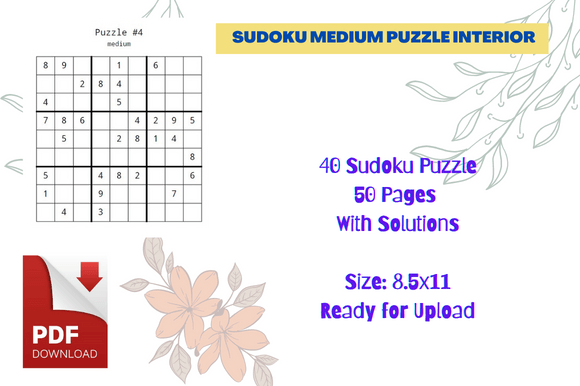
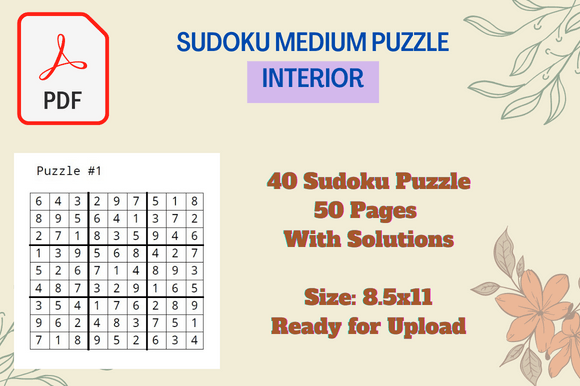
At its core, Sudoku is a logic-based puzzle. A common misconception is that it requires advanced mathematical skills, but this is not the case. The puzzle presents a 9x9 grid, subdivided into nine 3x3 regions. The objective is straightforward: fill the grid so that each row, each column, and each 3x3 box contains all of the digits from 1 to 9, with no repetition. The puzzle begins with some numbers already placed, providing the clues needed to deduce the remaining positions. It is a pure exercise in deductive reasoning and careful observation, making it accessible to anyone regardless of their affinity for arithmetic.
The beauty of Sudoku lies in its structured chaos. From a seemingly sparse starting grid, a solver must use logical constraints—what numbers *cannot* go in a cell based on its row, column, and box—to progressively reveal the unique solution. This process engages multiple cognitive functions: working memory to hold potential numbers, attention to scan the grid, and pattern recognition to see hidden relationships. It is a mental workout that feels like play.
The Purpose and Significance of Puzzle Solving
Why do people dedicate time to solving these number grids? The significance extends far beyond mere entertainment. Regularly engaging with puzzles like Sudoku has been linked to maintaining cognitive agility. It encourages a state of focused concentration, often described as a "flow state," where the mind is fully immersed in a challenging yet achievable task. This can provide a healthy break from the multitasking and fragmented attention demanded by modern life and work.
For adults, Sudoku serves as a practical tool for mental wellness. It can be a calming, solitary activity that reduces stress, a way to sharpen problem-solving skills applicable in daily activities and professional settings, and even a social activity when shared with friends or family. In educational contexts, it teaches logical thinking and perseverance without the pressure of formal instruction. Its practical relevance is undeniable: a Sudoku book is a portable brain gym, a creativity booster, and a simple source of daily accomplishment.
Sudoku in the Realm of Self-Publishing: The KDP Opportunity
The rise of print-on-demand and platforms like Amazon’s Kindle Direct Publishing has democratized book creation. Now, creators can design, build, and publish physical books without the need for large upfront costs or inventory. Puzzle books, particularly Sudoku, are a fantastic category for KDP. They cater to a massive, established audience looking for tangible activity books, and their creation aligns perfectly with the tools and format KDP supports.
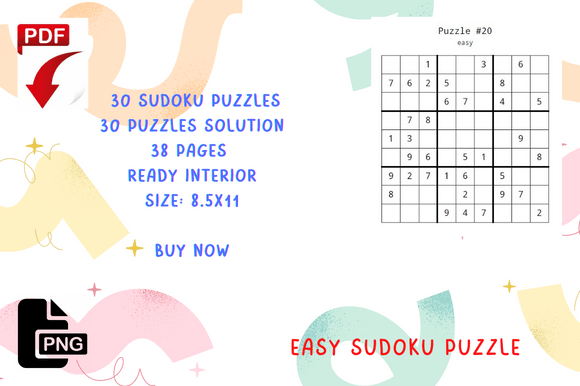
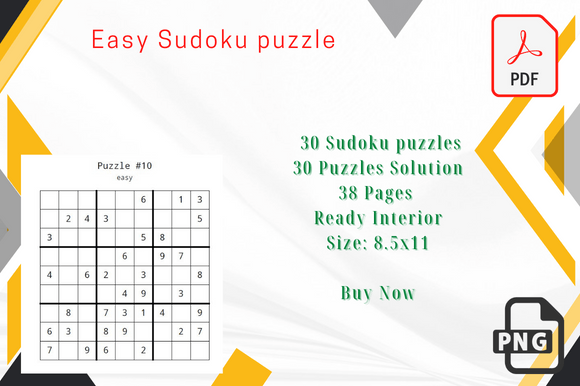
A typical KDP Sudoku interior, such as a book featuring "30 Puzzles With Solutions for adults," is designed for both the solver's enjoyment and the publisher's ease. Key features often include:
- Clear, One-Puzzle-Per-Page Layout: This prevents clutter and allows the solver to focus entirely on a single challenge without the distraction of other grids. It also creates a clean, professional look for the paperback.
- Easy Level Puzzles: Starting with easier puzzles broadens the appeal, welcoming beginners and ensuring a satisfying, non-frustrating experience. This is crucial for building a positive reputation and customer satisfaction.
- Standard Size (8.5 x 11 Inches): This familiar size is comfortable for solving and matches common KDP paperback trim options, making production straightforward.
- Included Solutions: Providing solutions at the end of the book is essential. It offers reassurance to solvers and completes the product, ensuring it is a self-contained experience.
- Unique Design: A visually appealing interior with clean lines, pleasant fonts, and perhaps subtle graphic elements enhances the user experience and makes the book stand out in a marketplace.
Creating such a book involves assembling the puzzle grids, ensuring their logical correctness, designing the page layout, and formatting it to KDP’s specifications. The process taps into creativity (design), technology (using layout software), and business (understanding market needs). For the KDP publisher, this isn't just about compiling puzzles; it's about building a helpful product that meets a specific reader intent: the desire for a quality, physical puzzle-solving activity.
Common Misunderstandings About Creating Puzzle Books
A common assumption is that creating a Sudoku book is merely about copying and pasting grids. In reality, a successful product requires thoughtful curation. The puzzles must be properly graded (all "Easy" in this case) and verified to have unique, logical solutions. The design must be functional, not just decorative—ensuring numbers are easy to read and pencil marks can be made if desired. Another misunderstanding is that the market is oversaturated. While popular, the demand for fresh, well-presented puzzle books remains steady. A book with a professional, unique design and a clear focus (like 30 easy puzzles for adults) can effectively find its audience by being reliably helpful and enjoyable.
Building a Broader Understanding: Sudoku as a Cultural Activity
Sudoku fits seamlessly into modern daily life. It’s the perfect companion for a morning coffee, a commute (where digital devices might be unwanted), a break between work tasks, or a quiet evening. It bridges generations, being enjoyed by teens, adults, and seniors alike. In a broader sense, the resurgence of analog activities like puzzle-solving reflects a cultural desire to balance our digital immersion with tactile, focused tasks that have a clear endpoint—a finished puzzle grid.
For the KDP entrepreneur, understanding this context is key. Publishing a Sudoku book is not just a business endeavor; it's participating in a culture of mindfulness and mental fitness. The product serves a dual purpose: it provides value to the end-user through engagement and cognitive benefit, and it provides value to the creator through the process of building and publishing a tangible item. It exemplifies how technology (KDP’s platform) can enable the distribution of non-technological, human-centric activities.
Examples of this fit are everywhere. Consider the reader who purchases a KDP Sudoku book to unwind after a long day of screen-based work. Or the traveler who packs it for a flight. Or the retiree who uses it as a daily mental routine. Each use-case underscores the product's practical relevance. The book becomes a tool for personal betterment, a small artifact of self-care in a busy world.
Final Thoughts: From Puzzle to Product
A Sudoku puzzle book interior designed for KDP, with its 30 easy puzzles, clean layout, and solutions, is a prototype of a helpful content product. It follows the principles of E-E-A-T (Experience, Expertise, Authoritativeness, Trustworthiness) by offering expertly crafted, correct puzzles in a trustworthy, user-friendly format. It optimizes for informational and transactional search intent by answering the user's need for "easy Sudoku puzzles for adults" and providing a direct path to purchase that solution.
Whether you are a puzzle enthusiast seeking to understand the deeper appeal of your hobby, or an aspiring publisher looking for a clear, rewarding project to launch on KDP, the world of Sudoku books offers rich insights. It demonstrates how a simple, logical game can transform into a meaningful activity and a viable creative business, connecting the solver’s need for engagement with the publisher’s opportunity to build something of value. So, grab a pencil, open a grid, or open a design program—the path from an empty square to a solved puzzle, and from an idea to a published book, is a journey of logic, creativity, and satisfying completion.