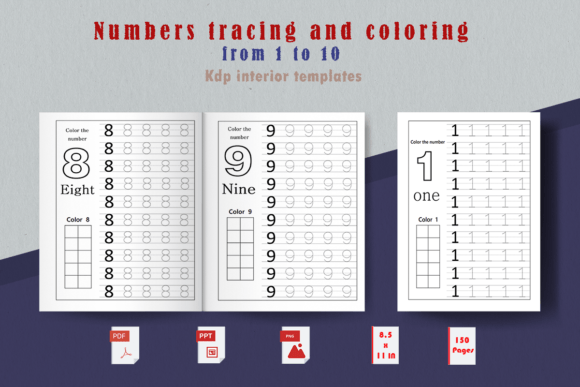
The Practical Workflow for Using Number Tracing Pages from 1 to 10
For educators, parents, and creators developing learning materials, the process of creating effective resources is often more involved than it appears. A simple activity like number tracing from 1 to 10 is foundational for early childhood education, but producing a polished, reusable, and adaptable asset requires thoughtful execution. This is where a dedicated template, such as an editable KDP interior template for number tracing and coloring pages, shifts from being a simple digital product to a core component in a creator's workflow.
Understanding the Role of Number Tracing in Educational Content Creation
Number tracing from 1 to 10 is a fundamental motor skill and cognitive activity. It helps young learners associate numerical symbols with their meaning while developing pencil control. In a professional or creative context, however, it represents a content asset. Whether you are a teacher preparing classroom materials, a parent creating personalized homework, an author compiling a workbook for self-publishing, or a blogger sharing free resources, these pages are a building block. The decision to use a pre-designed, editable template is a strategic one that affects preparation time, consistency, and output quality.
It fits into the broader process of educational resource development, typically occurring during the content assembly phase. Before this stage, one would have planned the scope of the workbook or lesson module. After generating the tracing pages, the next steps involve combining them with other activities, formatting for print or digital distribution, and finalizing the product. The editable template sits at the heart of this production stage, interacting directly with your design choices and publishing platform.
Integration with Tools and Publishing Workflows
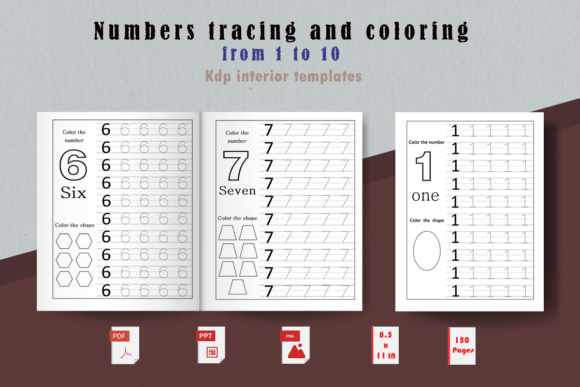
A high-quality number tracing template is designed for integration. The provided ZIP file containing PDF, PNG, and editable formats ensures compatibility with various tools. The editable aspect is crucial. You can change fonts to match your overall workbook's typography, adjust colors for visual appeal or printing considerations, and add or remove images to tailor the theme—perhaps adding animals or objects corresponding to each number.
For a self-publisher using Amazon KDP, the ready printable PDF with 8.5x11 dimensions and no bleed is formatted to meet the platform's standard interior requirements. This eliminates a significant formatting hurdle. The PNG files serve another workflow: they can be easily imported into graphic design software like Canva or Adobe products for further customization or to be incorporated into digital apps or slide presentations. This multi-format approach means the template interacts smoothly with both print-focused and digital-centric processes.
Organizing Your Production Process
Efficiency in content creation often comes from reducing repetitive tasks. Designing ten distinct tracing pages from scratch, while ensuring uniformity, consumes valuable time. Using a template standardizes the layout, spacing, and structure across all numbers from 1 to 10. This consistency is not only visually professional but also pedagogically sound, as children benefit from predictable, clear formats. The template handles the underlying framework, allowing you to focus your effort on customization and augmentation.
Consider a workflow example: An educator planning a month-long number recognition unit. They acquire the template early in their planning. During the resource creation week, they open the editable file, perhaps change the font to a dyslexia-friendly typeface, and add small coloring elements related to their weekly themes. They export the set as a PDF for classroom printing and also save the PNGs to embed in their weekly digital parent newsletter. This single asset feeds multiple distribution channels efficiently.
Practical Implementation for Long-Term Use
The utility of a well-made tracing template extends beyond a single project. Its long-term value lies in its reusability and adaptability. After initial customization for a workbook, you can save your modified master file. For a future project—perhaps a bilingual workbook or a holiday-themed activity pack—you can return to this master, swap colors and images, and rapidly produce a new set. This creates a personal library of foundational assets, improving your speed and quality control over time.
Usability is enhanced by features like no bleed and high quality. No bleed means the design is safe for standard home and professional printers without requiring specialized trimming. The high-quality resolution ensures that numbers and lines remain crisp in both print and digital zoom, maintaining the activity's clarity. When integrating the pages into a larger document, such as a full kindergarten math workbook, you can seamlessly combine the tracing PDF with other PDF activities using basic PDF manipulation software, preserving the print-ready status.
Customization as a Quality Control Step
Customization is not merely about aesthetics; it's a step for pedagogical and quality refinement. You might assess the default tracing line thickness and decide to increase it for very young toddlers. You could add subtle directional arrows on the number guides or integrate a ten-frame visualization next to the number 10 to deepen the learning context. This ability to edit empowers you to align the resource precisely with your instructional goals or your target audience's needs, moving beyond a generic printable.
For the entrepreneur or marketer selling educational products, this template is a starting asset. The process involves market research, product ideation, content creation, and packaging. The editable number tracing template accelerates the content creation segment. You can produce a professional-looking interior swiftly, allowing more time for the critical tasks of cover design, marketing copy, and sales channel setup. It interacts with business decisions by reducing upfront production cost and risk, enabling you to test market appetite with a polished product faster.
Key Considerations for a Smooth Integration
To integrate such a template smoothly into your routine, a little preparation is beneficial. First, ensure you have software capable of editing the provided format. Common tools include Adobe Acrobat for PDFs, or graphic design software for PNGs. Second, define your customization goals before opening the file. Decide on your color palette, font selection, and any additional imagery you plan to use. This prevents ad-hoc changes that might break visual consistency.
Organization is simple but important. Upon downloading the ZIP file, immediately organize the extracts into your project folder. Label the master editable file clearly. If working on multiple themed versions, use descriptive filenames. This practice prevents version confusion later. Finally, always print a test page. Even with no bleed and specified dimensions, checking the physical output confirms that your customizations translate well to the final medium, whether it's home printing or commercial KDP printing.
In essence, leveraging a number tracing from 1 to 10 template is a process-oriented choice. It inserts a reliable, flexible component into your content creation or educational planning pipeline. By handling the foundational design work, it frees your attention for the higher-value tasks of customization, pedagogical alignment, and distribution. For the professional, creator, or educator, it’s not just about the ten pages; it’s about incorporating an efficient, reusable module that supports consistent quality and scalable production across projects.