Why Star Maze Puzzles Are a Brilliant Brain Boost for Kids
In a world filled with flashing screens and instant digital gratification, the simple, tactile pleasure of a pencil navigating a paper maze offers a powerful counterpoint. Mazes, especially themed collections like Star Maze Puzzles, are not just idle pastimes. They are engaging tools that lay a foundation for critical cognitive development. The phrase "maze addiction starts early" might sound concerning, but when it involves these intricate pathways, it’s a wonderfully healthy habit for the growing brain. This exploration delves into the universe of printable star mazes, unpacking their purpose, their significance in early education, and their enduring relevance in fostering skills essential for modern life.
The Cosmic Appeal of Star Mazes
At their core, mazes are problem-solving landscapes. A Star Maze Puzzle elevates this basic concept by framing the challenge within a captivating theme—the cosmos. Stars, planets, and celestial pathways transform the exercise from a simple task into a miniature adventure. This thematic layer is crucial for engagement. For a young child, guiding a line from a "Start" rocket to a "Finish" planet feels more like a mission than a worksheet. This intrinsic motivation is the first step in learning. When children want to solve the puzzle, they are more receptive to the skills the activity is secretly teaching them.
Beyond Fun: The Hidden Curriculum in a Maze
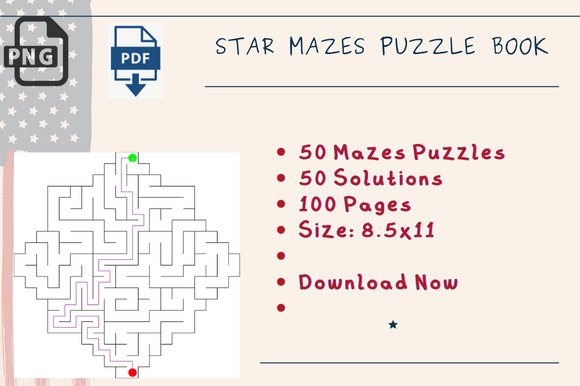
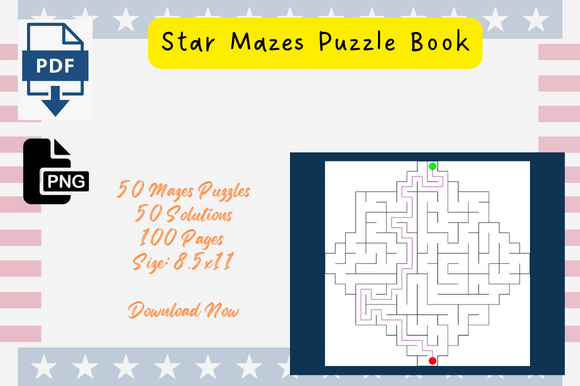
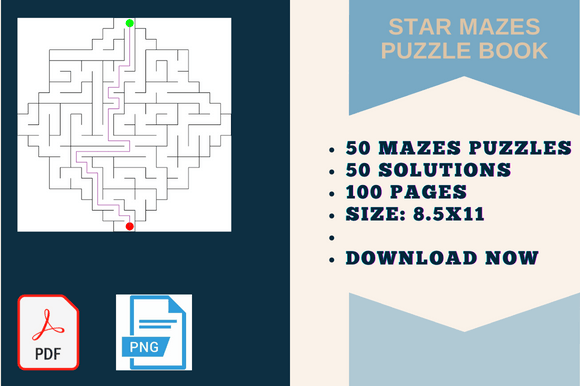
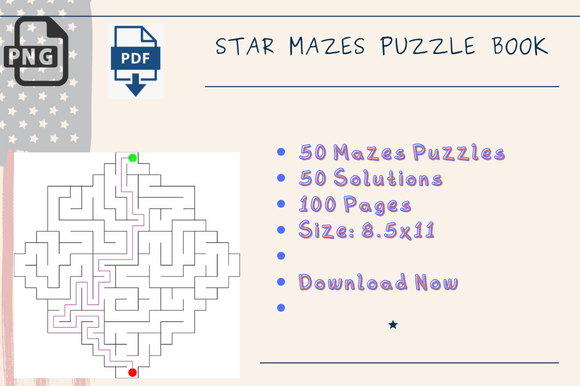
The immediate joy of completing a maze is evident, but the lasting benefits are what make activities like a 50 Star Mazes collection so valuable. These printable pages are designed to be more than just fun; they are covert lessons in several key developmental areas.
- Fine Motor Skill Development: The precise control required to draw a line within the narrow boundaries of a maze path strengthens hand-eye coordination and dexterity. This is foundational for future tasks like writing, tying shoes, and using tools.
- Problem-Solving and Strategic Thinking: Each maze presents a unique challenge. Children learn to analyze the path from the start, anticipate dead ends, and devise a route to the goal. This trial-and-error process teaches persistence, logical reasoning, and the ability to plan ahead.
- Focus and Concentration: Navigating a maze demands sustained attention. This focused engagement helps train a child’s mind to concentrate on a single task, a skill increasingly important in a distractible world.
- Visual-Spatial Reasoning: Understanding the relationship between shapes, spaces, and paths on the page enhances spatial intelligence. This ability is linked to success in fields like mathematics, engineering, and even art.
All of these skills are exercised while the child is simply "having a blast." The educational payload is delivered effortlessly through play.
The Practical Relevance: Printable Mazes in Modern Learning
In today's educational environment, which blends traditional methods with digital resources, printable activities like star mazes occupy a unique and vital niche. Designed as US Letter Size 8.5 x 11 pages, they are instantly accessible. They don’t require batteries, internet access, or software updates. This makes them perfectly suited for varied settings: the classroom, where they can be used for individual skill-building or quiet group work; the home, as a constructive rainy-day or travel activity; and even therapy sessions, where occupational therapists use mazes to target specific motor and cognitive goals.
Their printability also offers tangible benefits. The physical act of holding a pencil and creating a solution on paper provides sensory feedback that screen-based activities often lack. This connection between thought and physical action is a critical part of early learning. Furthermore, a collection of 50 mazes provides graduated challenge. The puzzles are described as "mildly challenging for the young ones," meaning they are designed to be achievable yet stimulating, building confidence with each completed page.
Clarifying Common Misunderstandings
Some may assume that mazes are too simplistic or outdated for contemporary education. This is a significant misunderstanding. While the format is classic, the cognitive demands are timeless and directly applicable to modern challenges. The problem-solving logic used in a maze is akin to the logic needed for coding, where one must navigate a program through a set of logical conditions. The focus required is the same focus needed to listen to a teacher in a busy classroom or follow a multi-step instruction. Mazes are not a replacement for technology; they are a complementary foundation that builds the mental stamina and agility to use technology effectively.
Another assumption is that mazes are purely for entertainment, with no long-term value. As outlined, the opposite is true. The skills honed are cumulative and transferable. The fine motor control gained makes learning to write easier. The perseverance learned from overcoming a tricky dead end translates to tackling harder math problems later. It’s an investment in cognitive capital.
Building a Broader Understanding: Mazes as a Metaphor
Engaging with star mazes can also serve as a gentle introduction to broader concepts. The celestial theme naturally sparks curiosity about space, science, and exploration. More abstractly, the maze itself becomes a metaphor. Life is full of paths, choices, obstacles, and goals. Completing a maze teaches a child, in a safe and contained way, that obstacles can be overcome with patience and thought, that sometimes you must backtrack to move forward, and that reaching an objective brings a sense of accomplishment. These are life lessons packaged in pencil and paper.
For parents, educators, and caregivers, providing these activities is a proactive step in supporting holistic development. It’s an acknowledgment that learning happens in many forms, and that cultivating a healthy "addiction" to constructive, challenging play is a gift. A collection of 50 Star Maze Puzzles offers a structured, reusable, and scalable resource to do just that. It’s a toolkit for building stronger, more capable, and more confident young minds, all while they journey through a galaxy of stars on a page.
The Enduring Star in a Toolkit for Growth
In conclusion, star maze puzzles represent a perfect synergy of engagement and education. They capture a child's imagination with a cosmic theme while systematically exercising the brain's problem-solving, motor, and focus muscles. Their printable format makes them a versatile and practical resource in homes and schools, serving as a vital counterbalance to purely digital play. By demystifying their purpose and highlighting their hidden curriculum, we can appreciate them not as simple diversions, but as foundational exercises. When we say "maze addiction starts early," we celebrate it. It's an addiction to thinking, to trying, to learning, and to persevering—a truly healthy habit forged in the fun of finding a path through the stars.